
Northern Adventures St Pancras & Camden Arts Centre
An exhibition of Northern European art on two sites
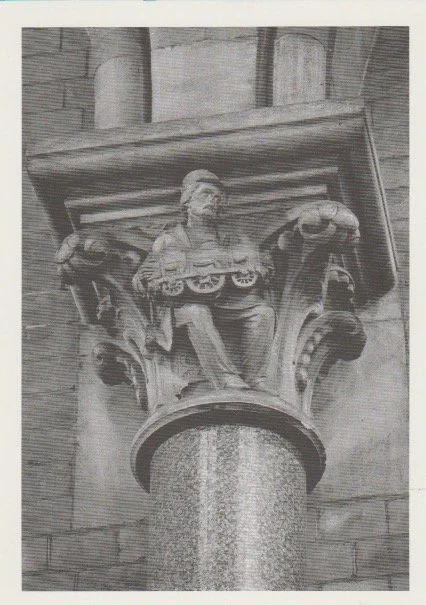
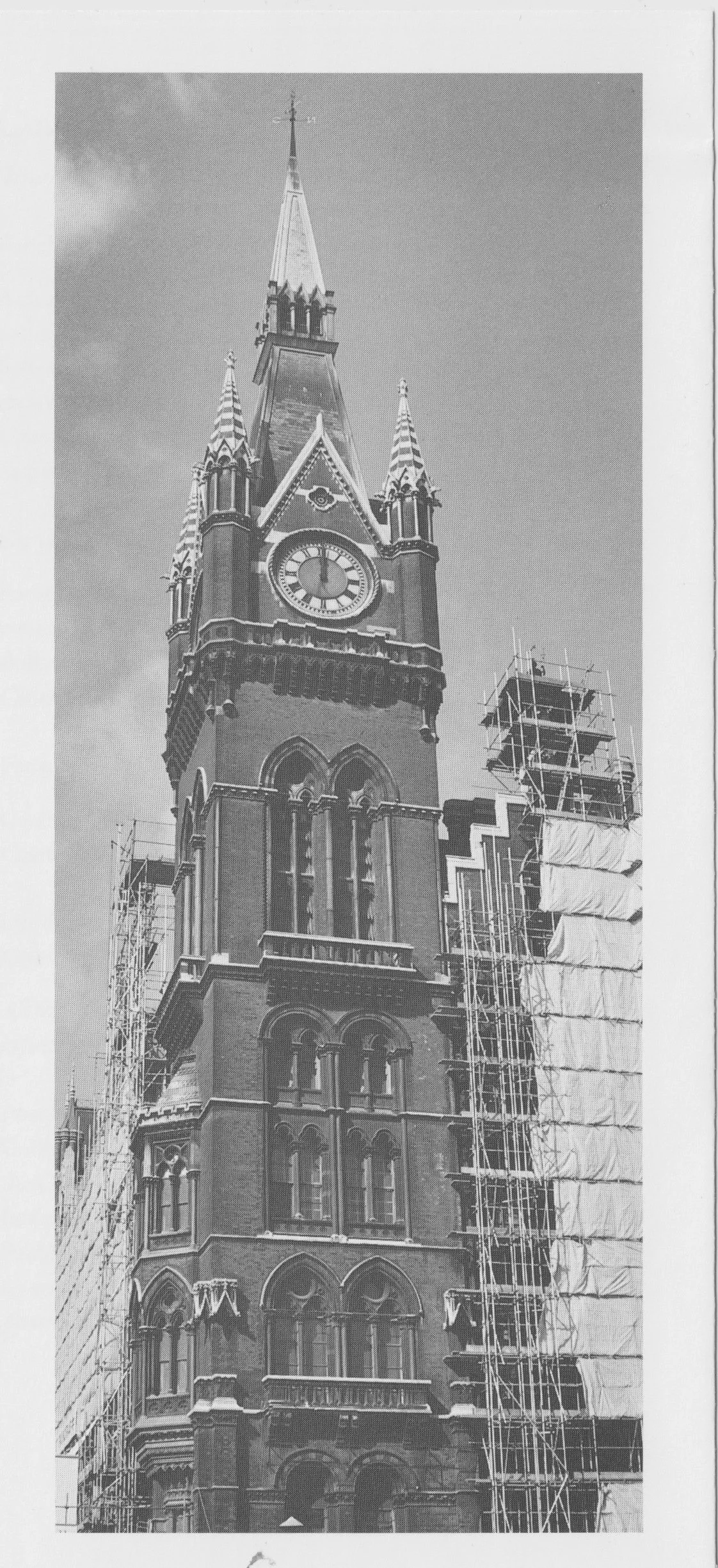
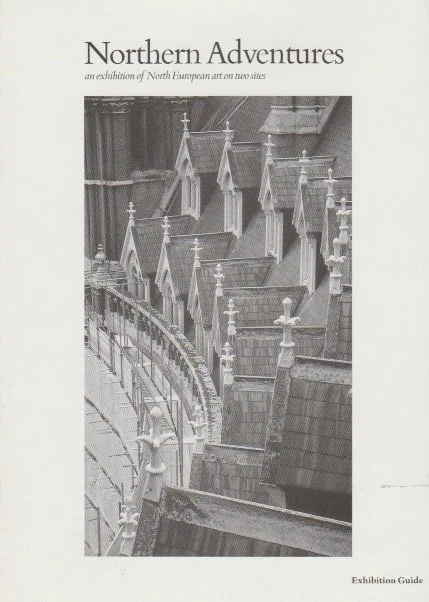
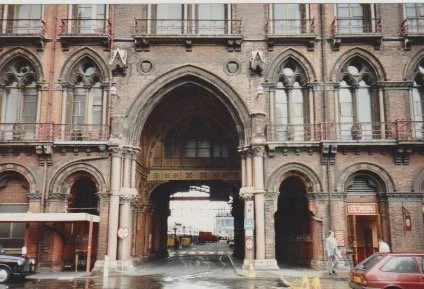
Front St Pancras Station
© Edward WoodmanClick to enlarge…
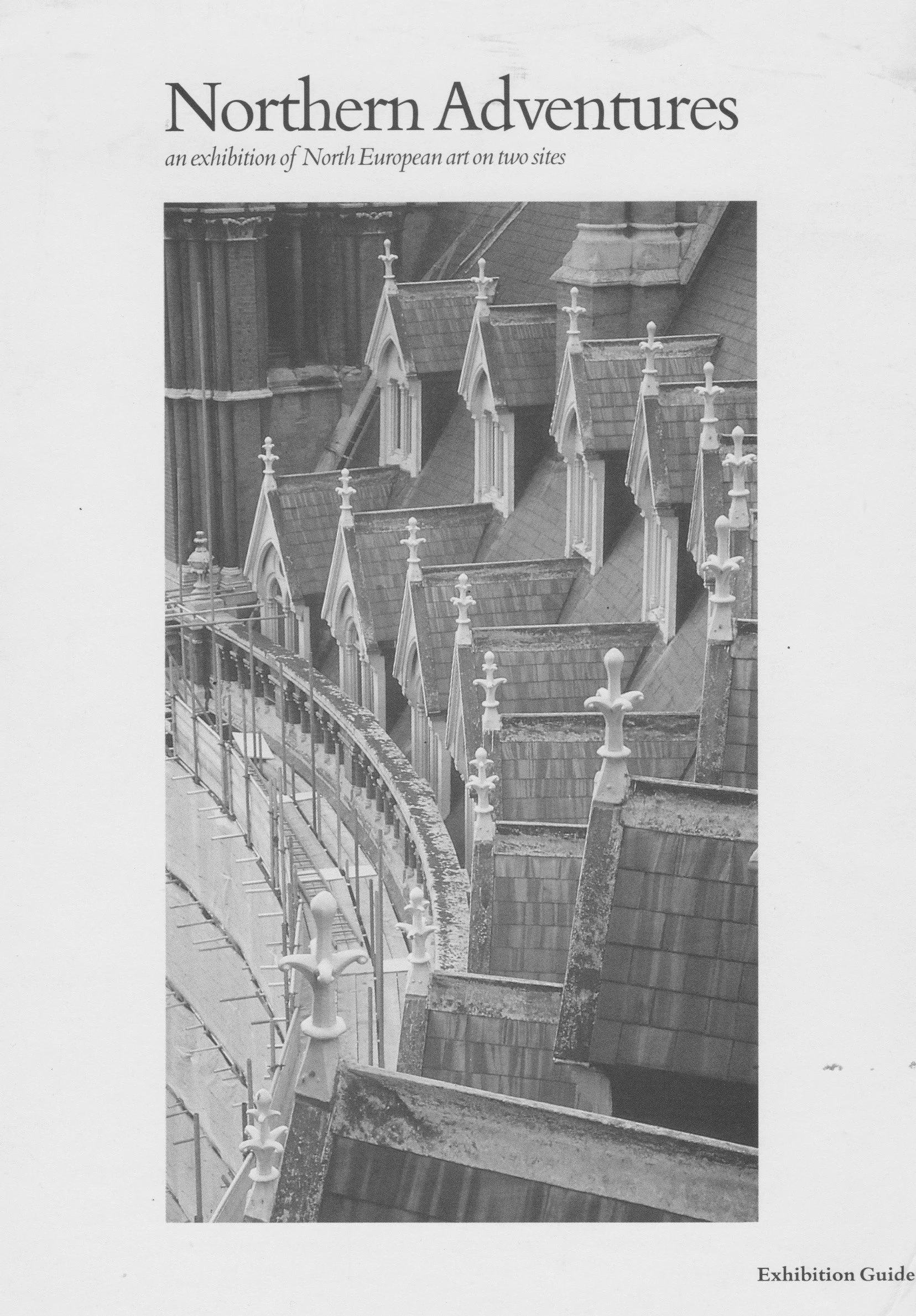
Exhibition Guide
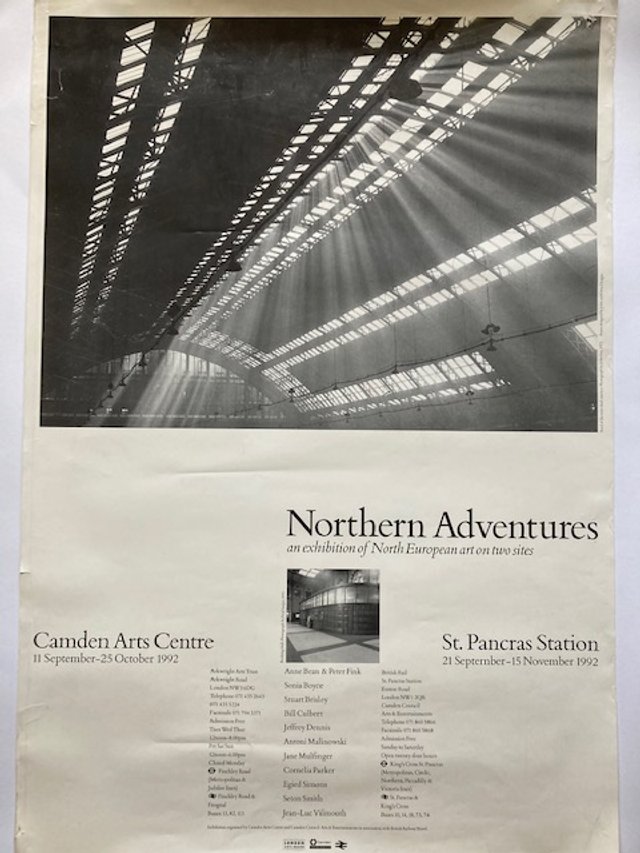
Northern Adventure celebrates the past, present and future of St Pancras, a well-loved London landmark which for over a century has represented a gateway to the North of England. The station and its environs are undergoing radical changes, including the creation of a terminus for the Channel Tunnel link. This has provided an opportunity for the invited artists to create sire specific work especially for this time of transition.
Intrinsic to this project is an enquiry into how art functions in public places, how the public at St Pancras, the great number of travellers – commuters, visitors, voyagers – who hurry about their business every day, can gain new insights to familiar surroundings through such interventions. A metropolitan terminus has any number of functions beyond that of simply moving people from place to place, as it encapsulates within that practicality the hopes, dreams and desires of all those who arrive and depart.
All the artists included in this exhibition have a record of working on particular architectural sites as well as for galleries, a facet of their practice which can be seen as simultaneously at the Camden Arts Centre. The two site reveal different nuances and emphases inspired by the differing contexts.
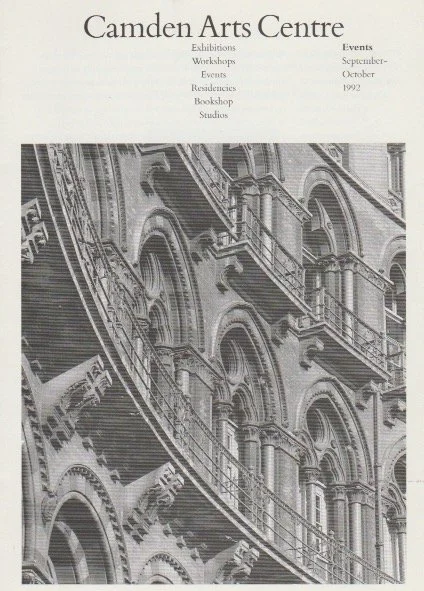
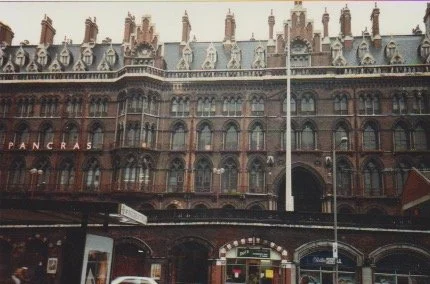
The paradox of the gothic Midland Grand Hotel juxtaposed with the vast iron and glass drum of the railway shed, amply illustrates architect Sit Gilbert Scott’s view that ‘architecture should decorate construction’. It also represents the meeting of Victorian ideals with the modern. St Pancras has inspired many artists since it was built and it is from Paul Nash’s painting ‘Northern Adventure’ (1929) that the title of the exhibition is derived. The combination of art and architecture is an underlying theme in all the work shown, but it is the station itself that has moulded the commissioned paintings, sculpture and photographs.
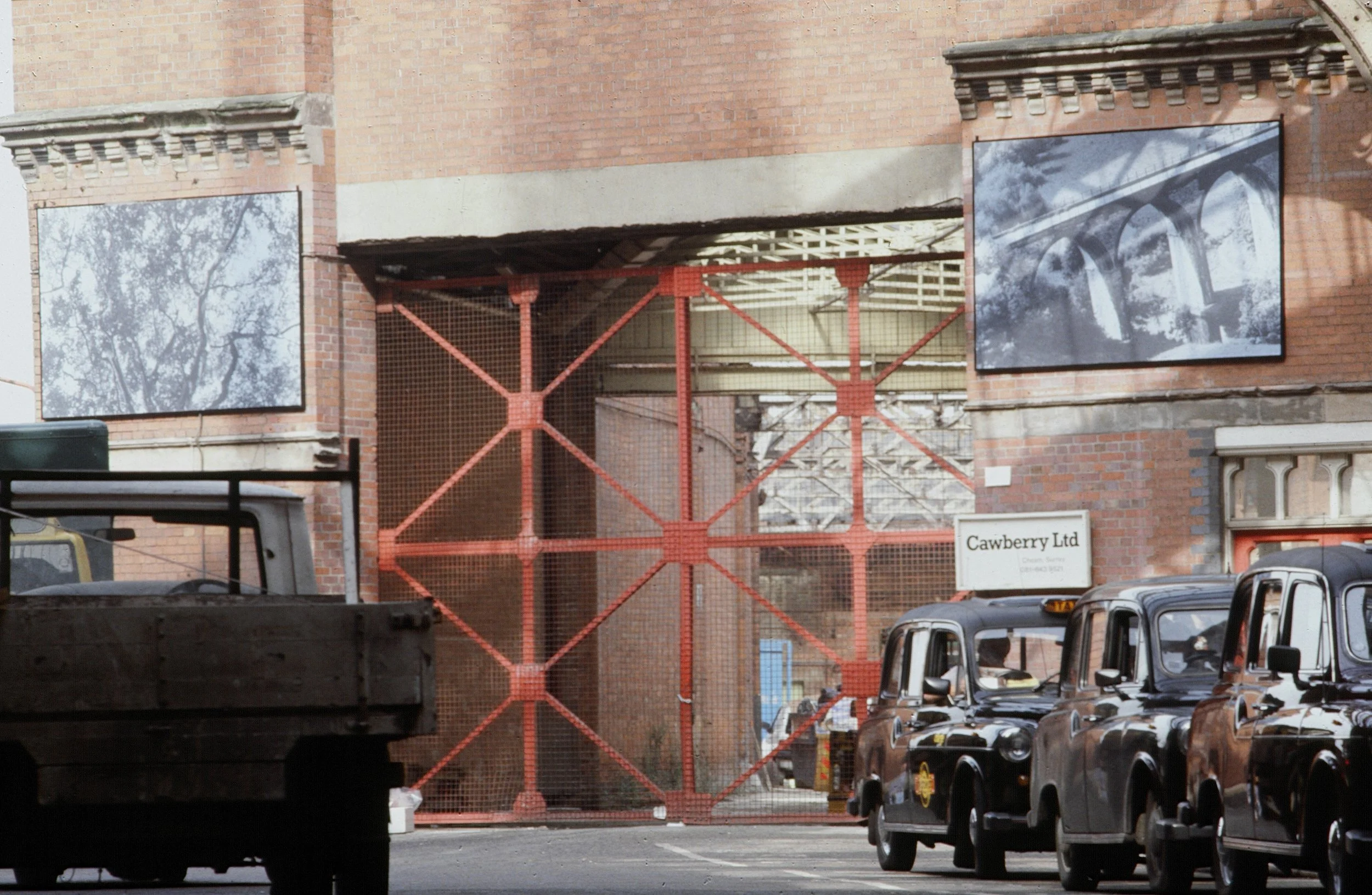
The original entrance to St Pancras is through the first arch into the glass-roofed taxi rank. It is here that the new arrival is met by a harbinger of what might lie at the end of the journey. Seton Smith’s two photographic images of the Derbyshire landscape, the former destination of the now defunct Midland Line, reflect Smith’s concern with metaphor. The viaduct as a means of change and the tree as a symbol of nature, the station providing a transition from one location to another. At the Centre, Smith’s images of the bed and garden placed face-to-face restate this questioning of the language of nature and architecture.
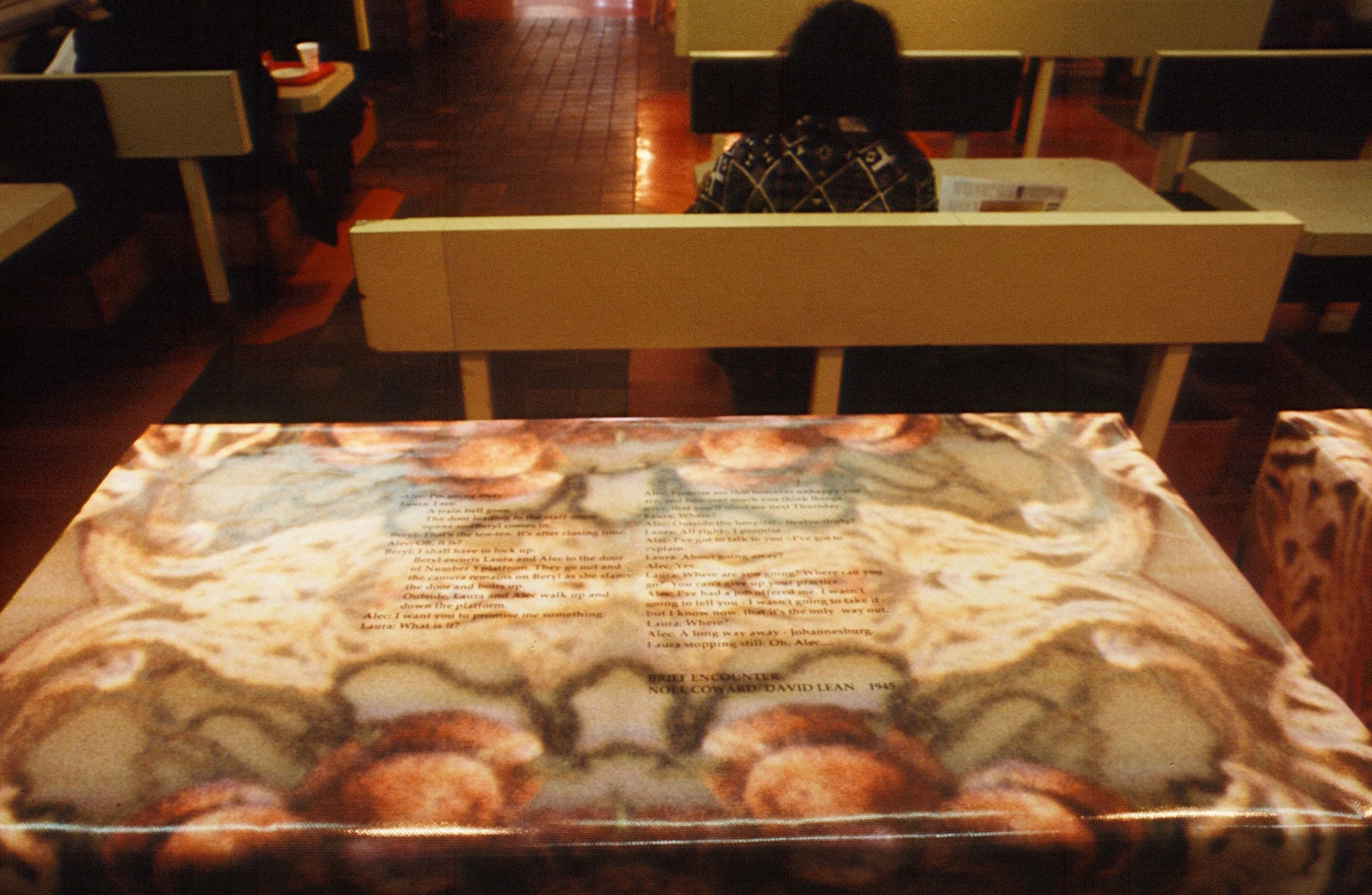
Using as a starting point the fictional life of the station café in the film ‘Brief Encounter’, Sonia Boyce has placed a rich collage of images and texts in the Traveller’s Fare Buffet. This demonstrates her continuing concern with the temporary nature of such liaisons. She has covered a number of ‘stand only’ tables with fragments of messages and messengers, the very act of standing to eat or drink emphasising the desire to move on quickly. A linking alcove between the two galleries at the Centre is the location for two photographic works featuring two sets of couples, the details of their faces so displayed as to draw visitors briefly into close contact in the small viewing space.
The rootless condition of society and the resultant consequences for those without roots have long been central to Stuart Brisley’s work. Two constructions, based on terraced houses have been made: the steel Bloody House at St Pancras accompanied by a text by Maya Brisley and the wooden Anonyme at Camden Arts Centre is surrounded by Brisley’s photographs. Both are structures without solid walls – they are permeated by the outside. ‘The terminus is a great site of the unconscious, as remarkable in its way as the edge of the sea or the horizon’ (Stuart Brisley).
Click to enlarge…
St Pancras Station
Click to enlarge…
Camden Arts Centre
Click to enlarge…
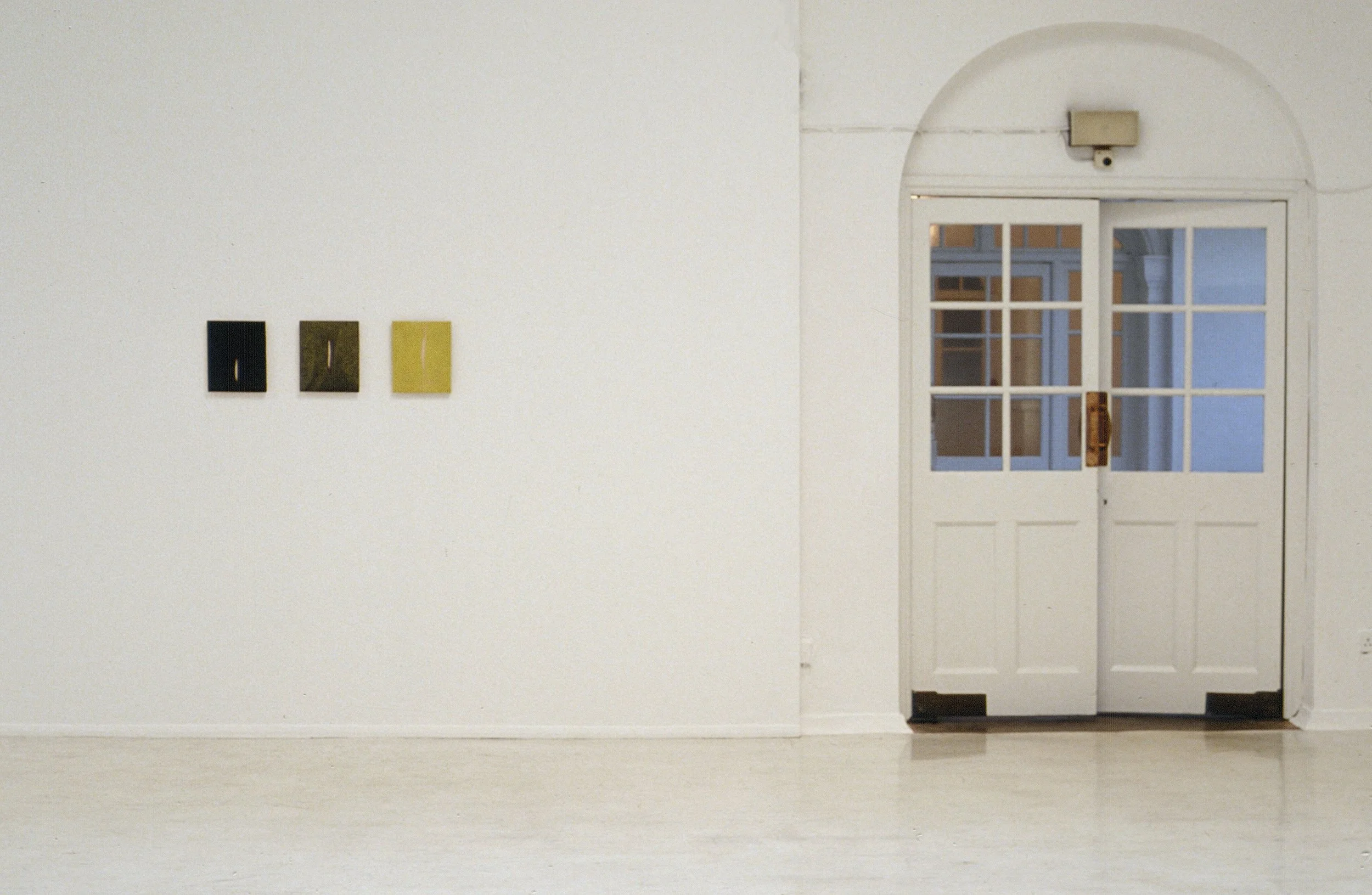
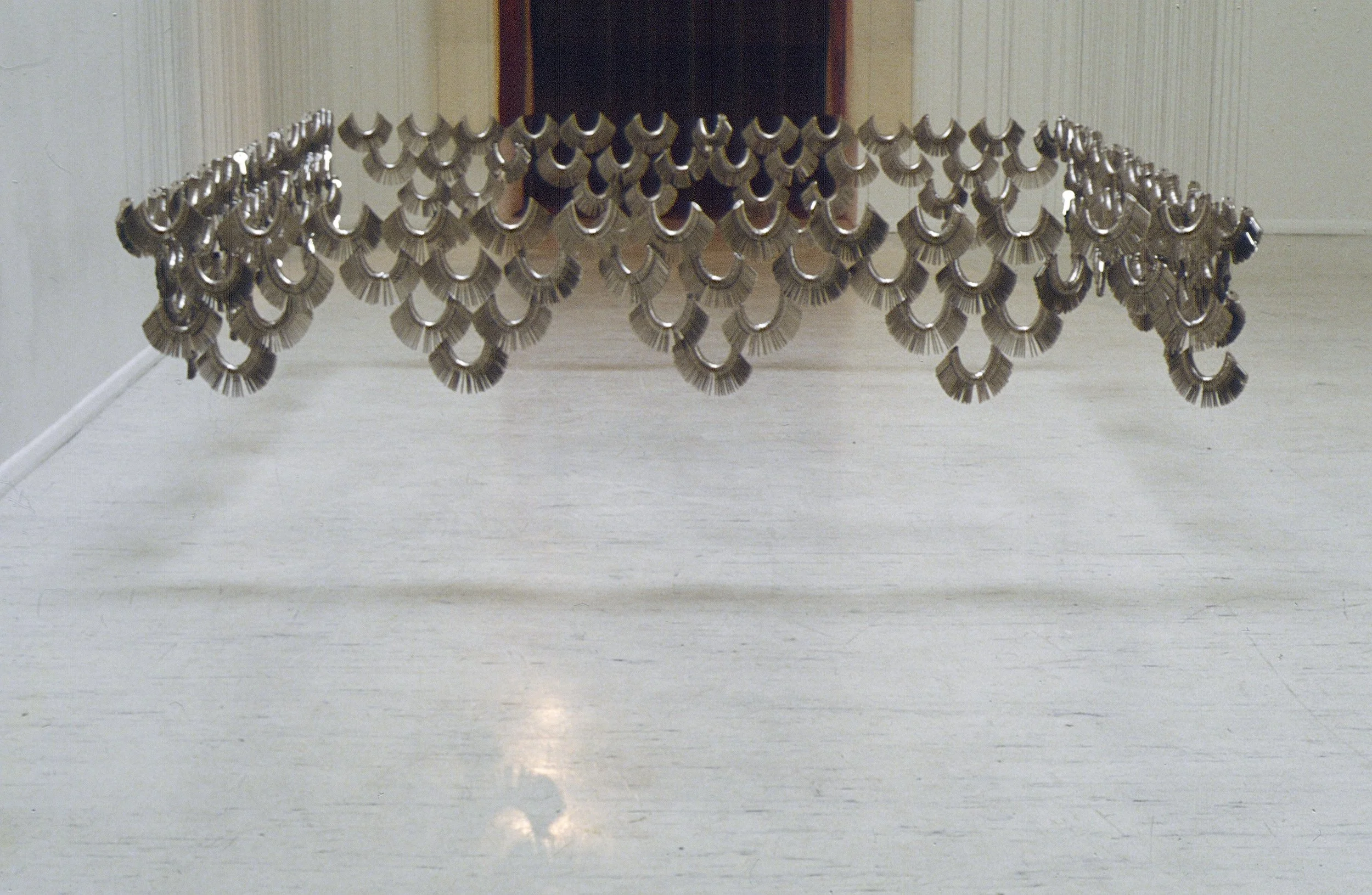
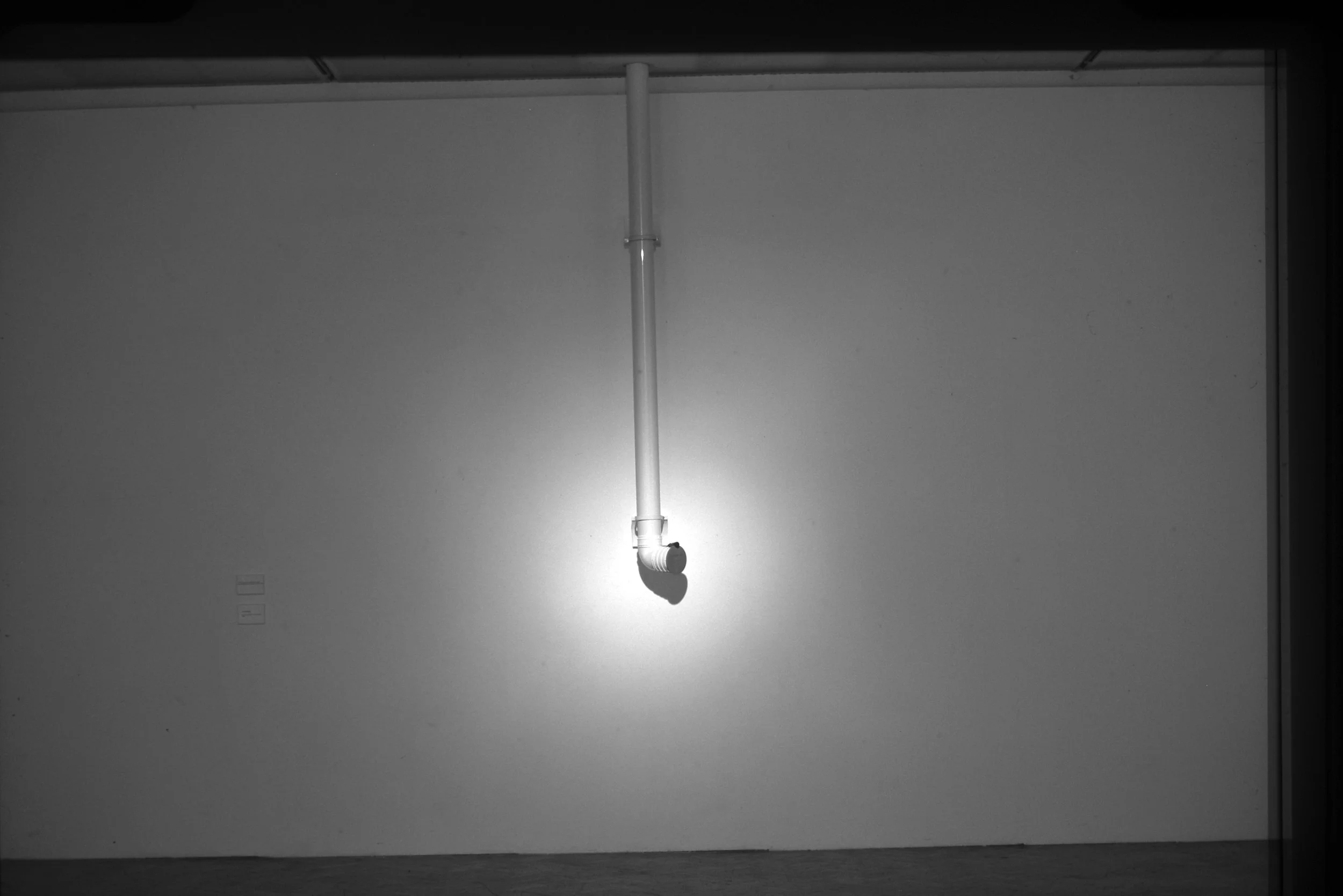
The mass of coming and going has also been alluded to in miniature by Egied Simons. An elongated pigeon loft added to the Royal Mail depot outside the station has many connections with the disparate functions of a mainline station and the constant flutter of people, freight, workers, mail. By comparison, the photographic pieces at the Centre are calm, leaving the viewer to perceive the space as it is denoted by light and dark. The scenes, not instantly recognisable, only slowly crystallise into a known image.
The basis of perception is evident in Antoni Malinowski’s dense stroke-lined work in the final exit arch from the station. Mapping uses brush stroke upon brush stroke and the repetition of military map marking symbols to build up undulating pools of colour on the pavement. Marking out time and space with signs, it is a continuous process and one which is inherently futile as the marks are fugitive, disappearing naturally with the wear of repeated footsteps. The paintings at Camden Arts Centre are an inseparable part of the complete work, part parts distilled down to the essential spirit of the place.
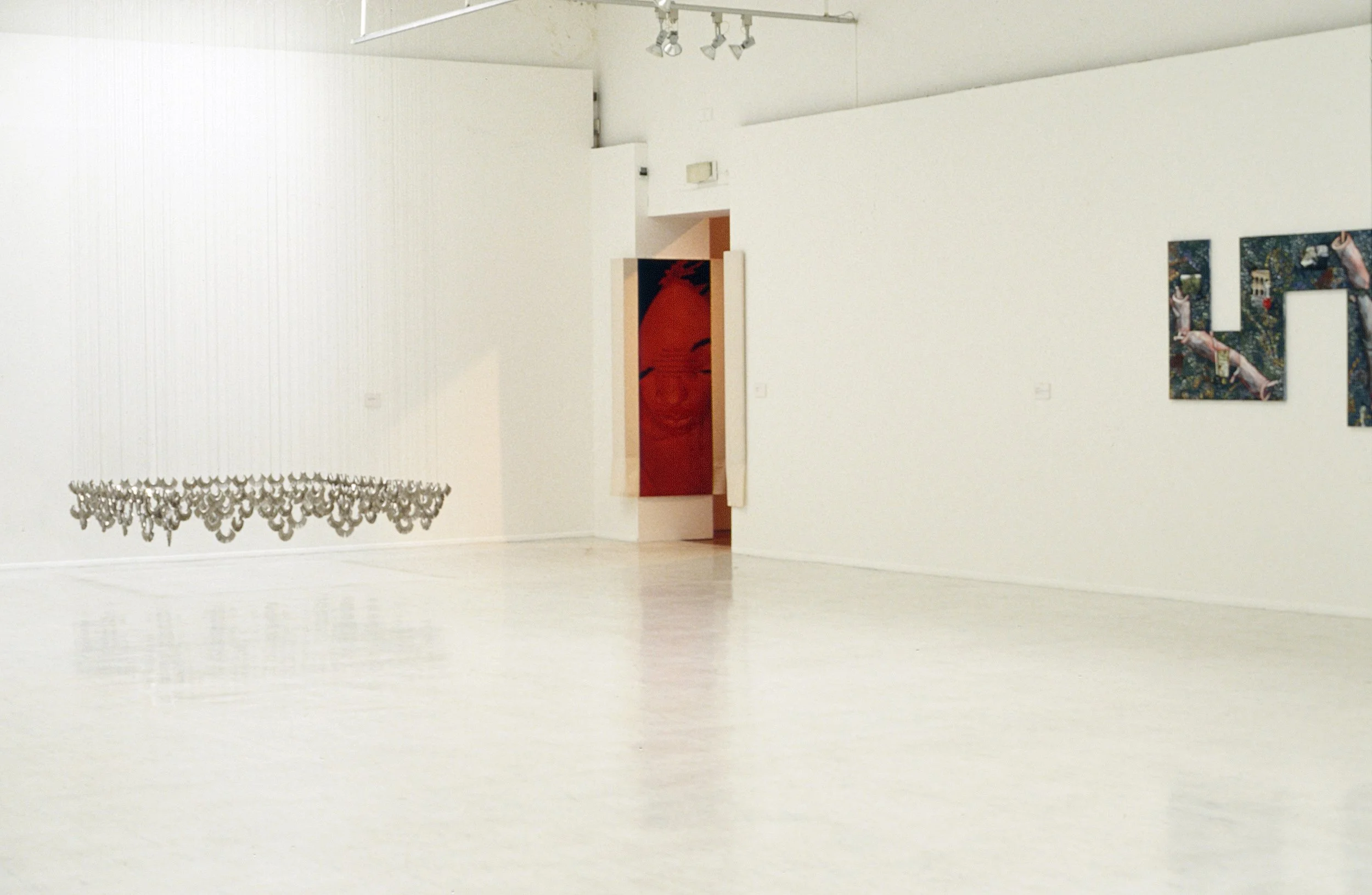
Metaphysical connections also play a part in Cornelia Parker’s work. Made and photographed in the cavernous spaces of the former hotel (no longer accessible to the public), these small sculptures are seen here only as images in postcards. Parker was able to take advantage of the current restoration of the building, creating assemblages which draw on the state of transition caused by this conservation work. The swirling specks of matter placed in the light wells at Camden Arts Centre may be reminders of substances found in any dwelling and of their impermanence. Thus soot becomes carpet, chalk becomes matches and phosphorous becomes electricity. Change is all.
Cornelia Parker: 8 postcards made from the interior of the Midlands Hotel, St Pancras
Click to enlarge…
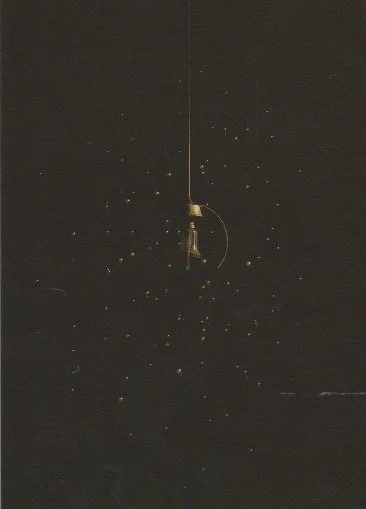
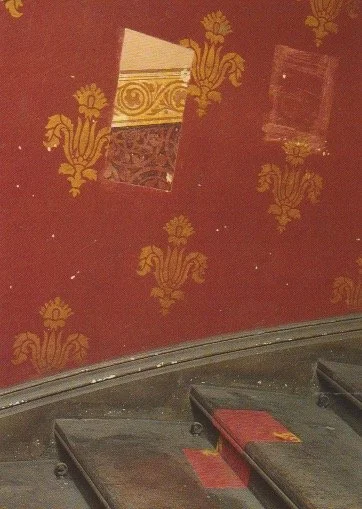
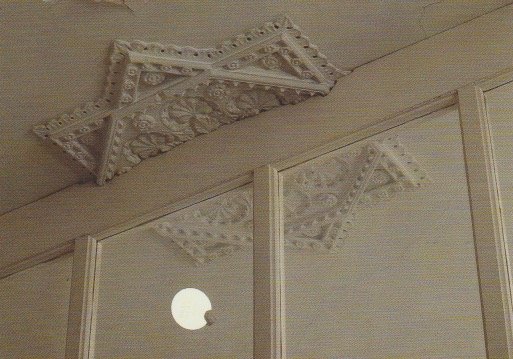
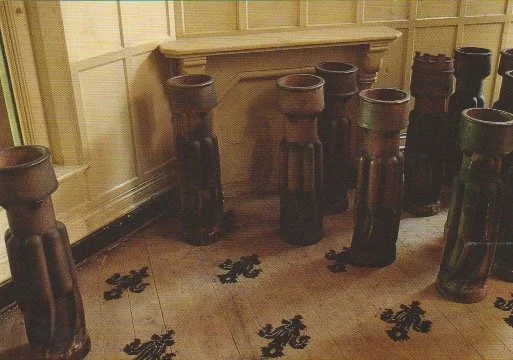
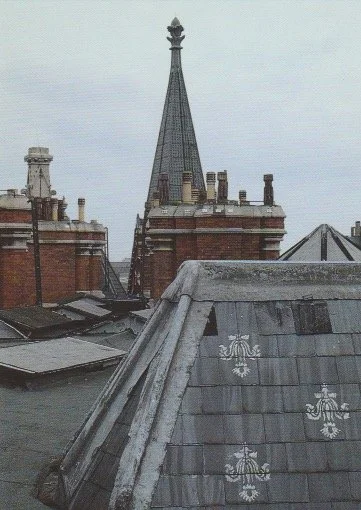
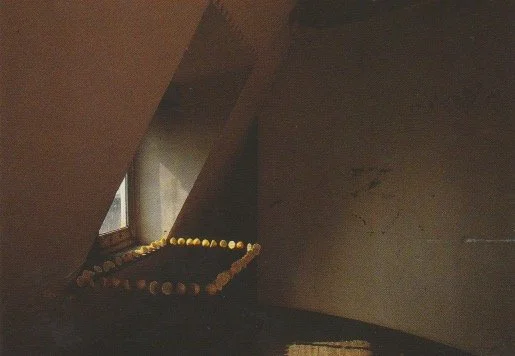
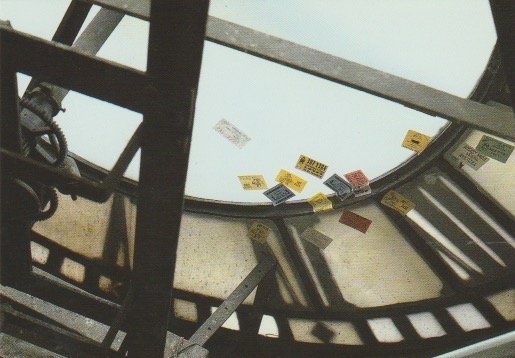
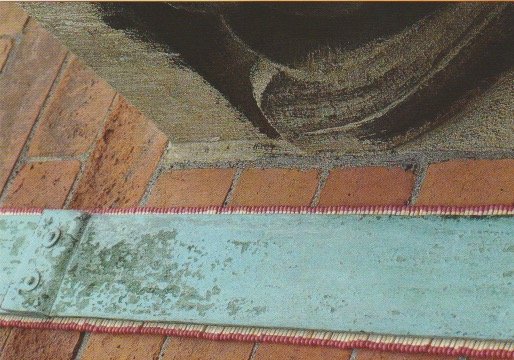
Photographs of St Pancras by Edward Woodman
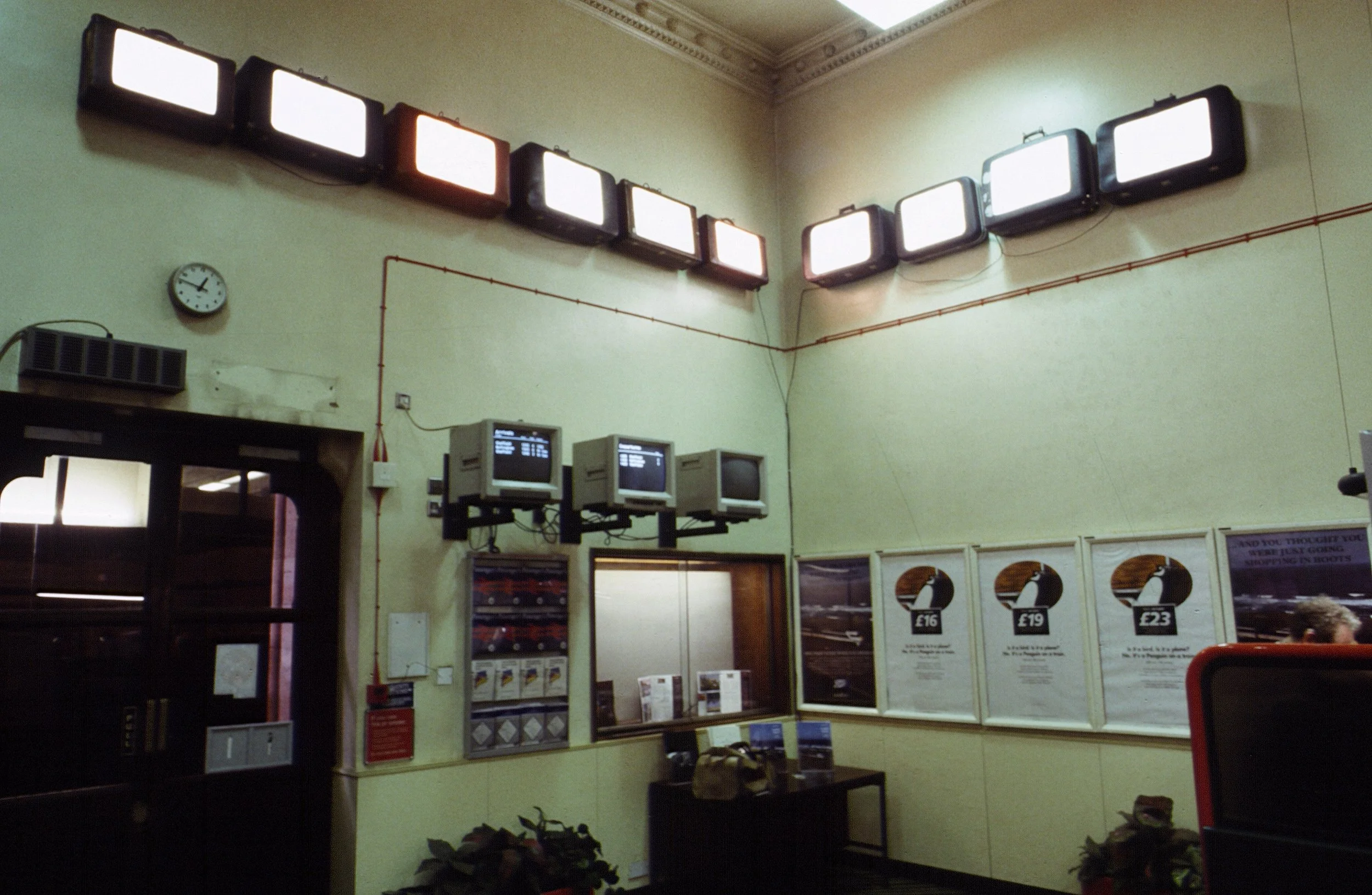
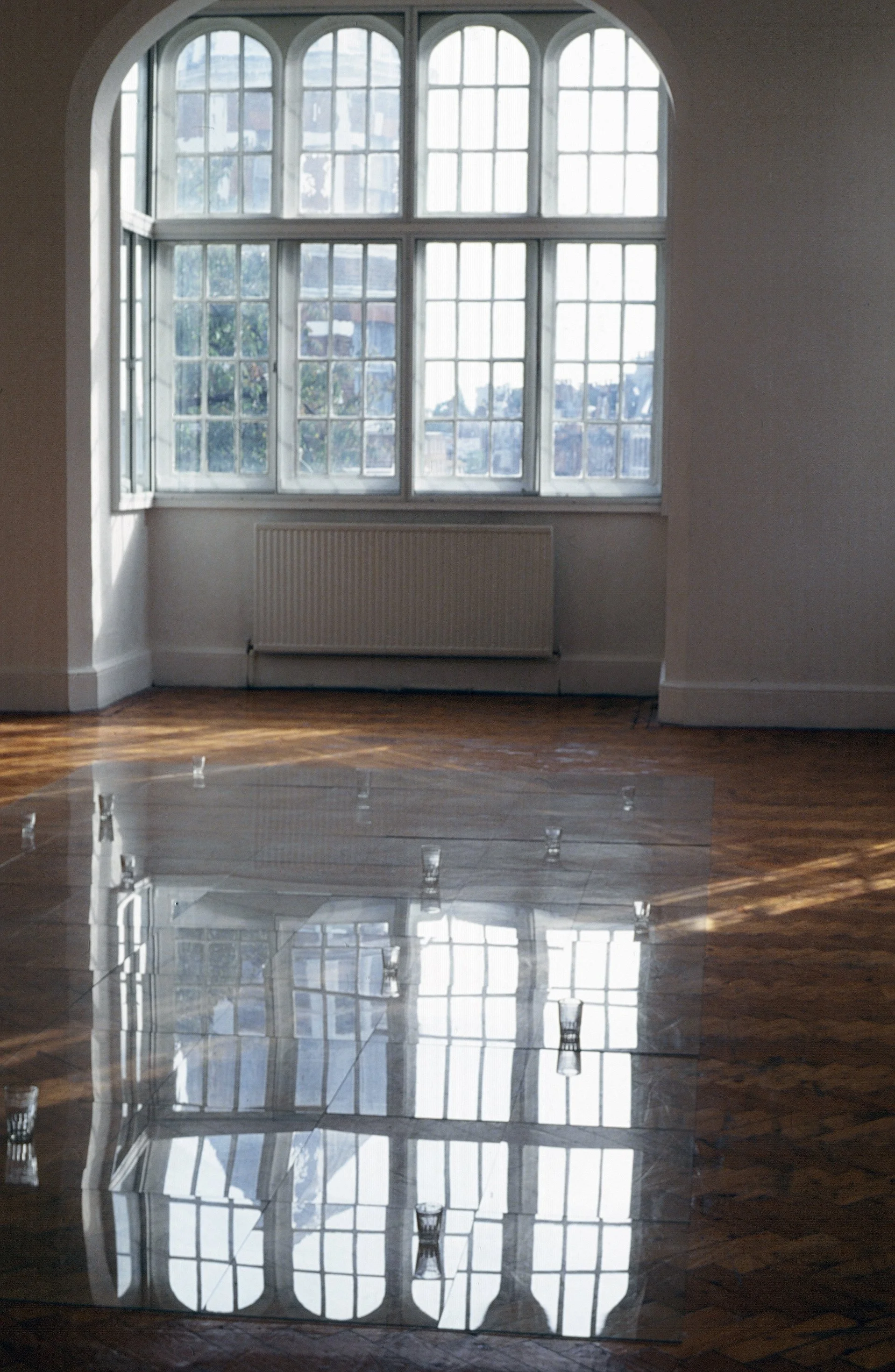
The ephemeral nature of travel alluded to in Bill Culbert’s suitcase monitor also refers covertly to the mortality of the traveller. Abandoned suitcases delicately suffused with light provide no information about the past or future journeys, despite harking back to their owners and the travel undertaken. The temporal nature of objects is further emphasised in Culbert’s glasses on glass, Anchoves et Moutarde, at the Centre. The sense of the object unfolds through its reflection and shadow rather than through its solid form, the reality being perceived only through an illusion.
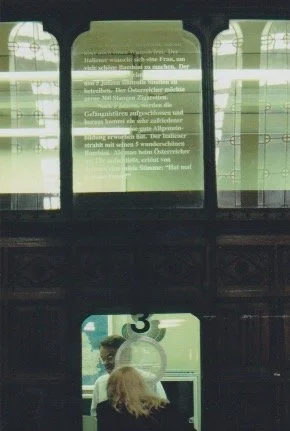
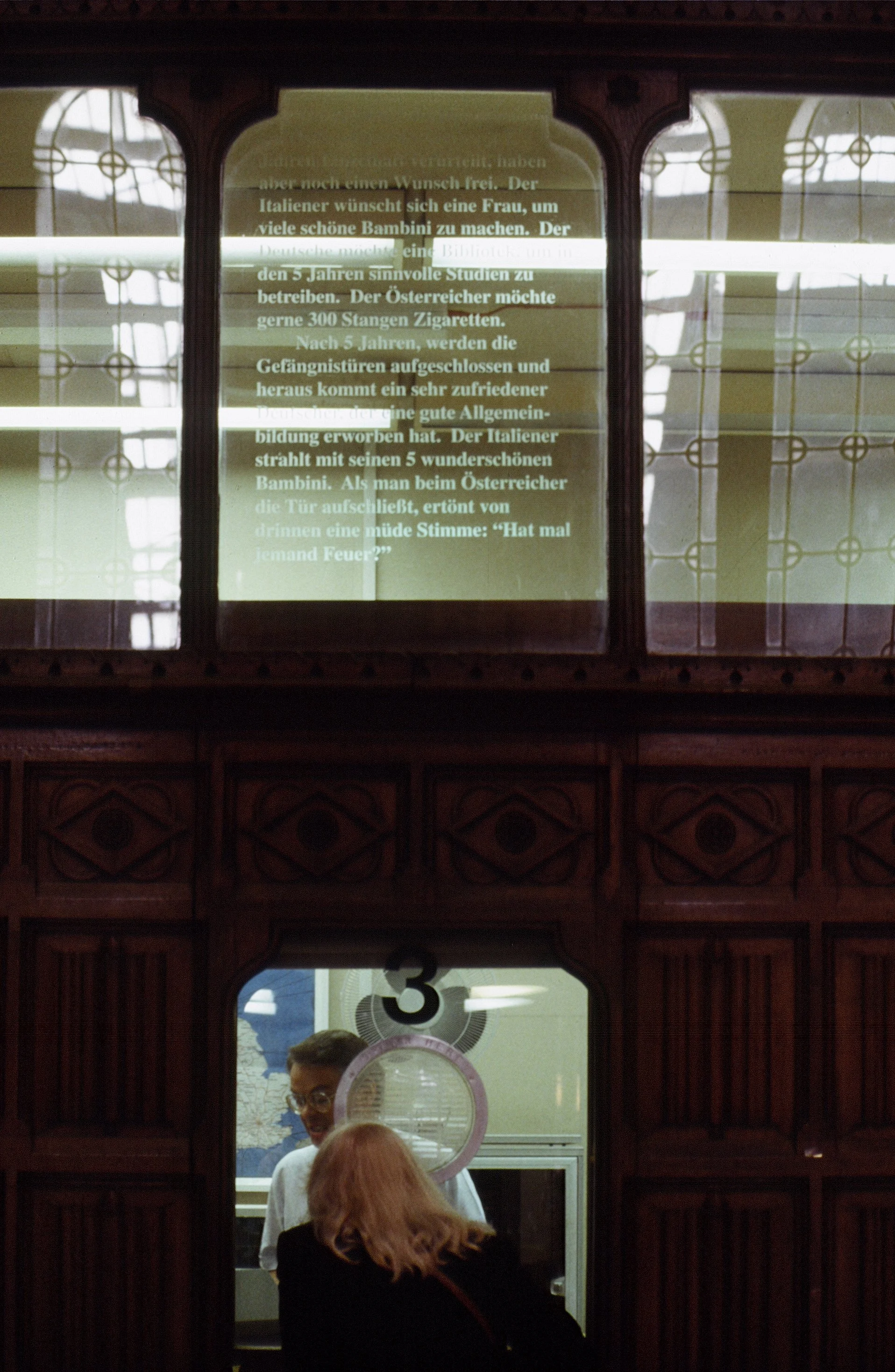
Jane Mulfinger :
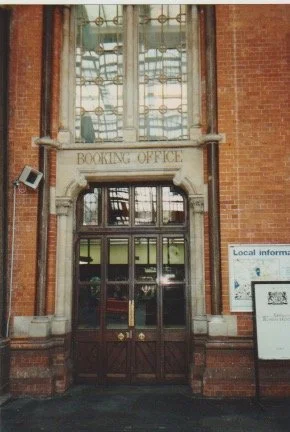
Booking Office windows replaced with etched glass text of jokes in European languages
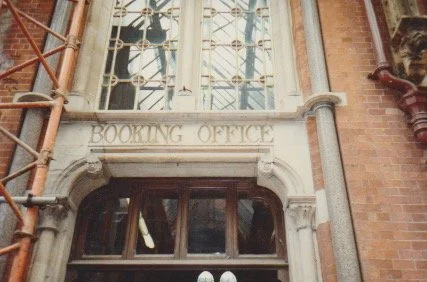
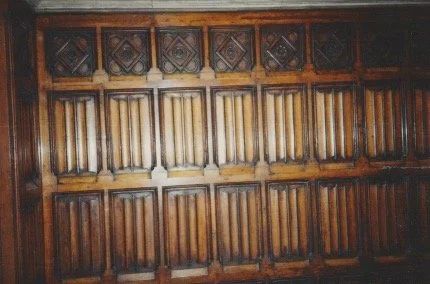
Many of the artists in Northern Adventures are interested in the use of light. In Common Knowledge, Jane Mulfinger has etched jokes on the glass in the windows of the wooden panelling of the ticket office. These jokes (by Europeans about Europeans) are transcribed in their original languages, bringing about a metaphysical meeting of cultural differences and prejudices. Mulfinger uses light gain at at Camden Arts Centre where cast-off clothing is stretched across a glass vaulted skylight in a hidden roof-space, and only seen through means of a periscope. The viewer is isolated in the act of spying onto a different reality – a one to-one communion with a hidden form.
Jane Mulfinger installed jokes over the Booking Hall in St Pancras.
They were etched in glass. Each joke was in a European language and was a joke about another European nation.
The first joke translates very roughly:
An Italian, German and Austrian are visited by a genie while in prison for 5 years. The genie grants them three wishes. The Italian wishes for a woman to make beautiful babies together. The German wants a library in order to become educated. The Austrian wishes for 300 cartons of cigarettes.
After 5 years, the prison door is opened and out comes the happy Italian with his family, and the German comes out, pleased with his education. The Austrian asks meekly, “Does anyone have a light?”
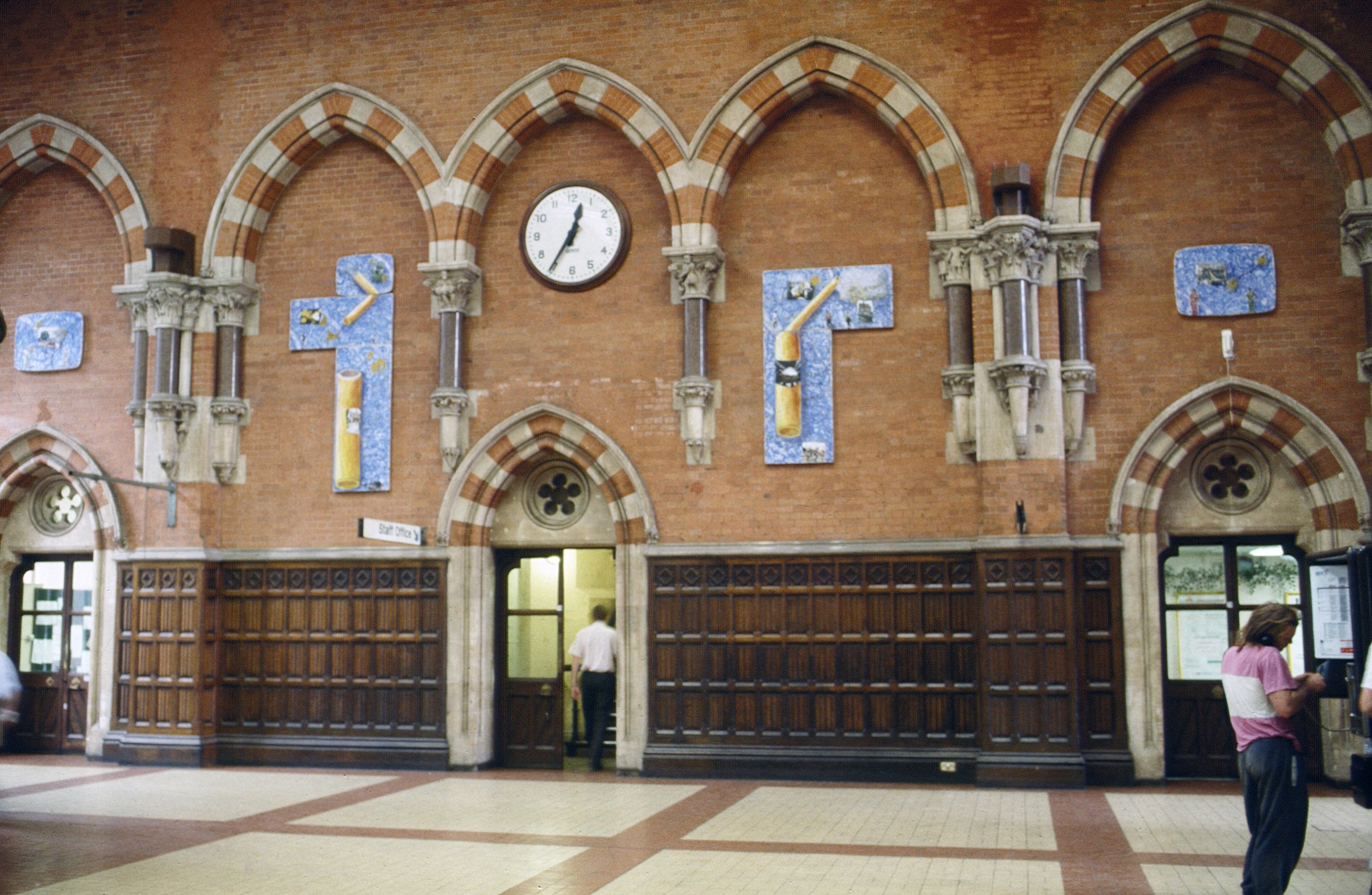
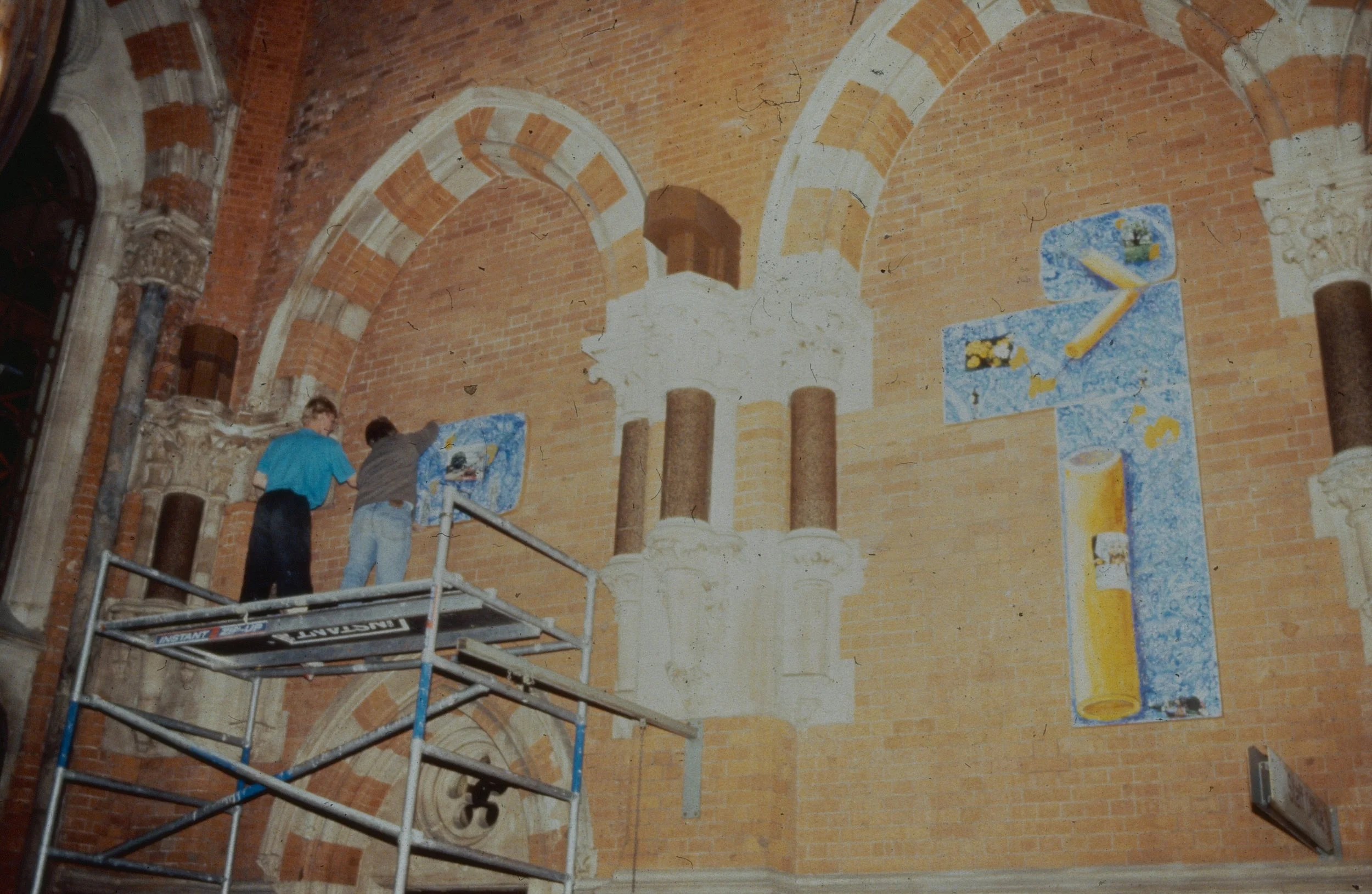
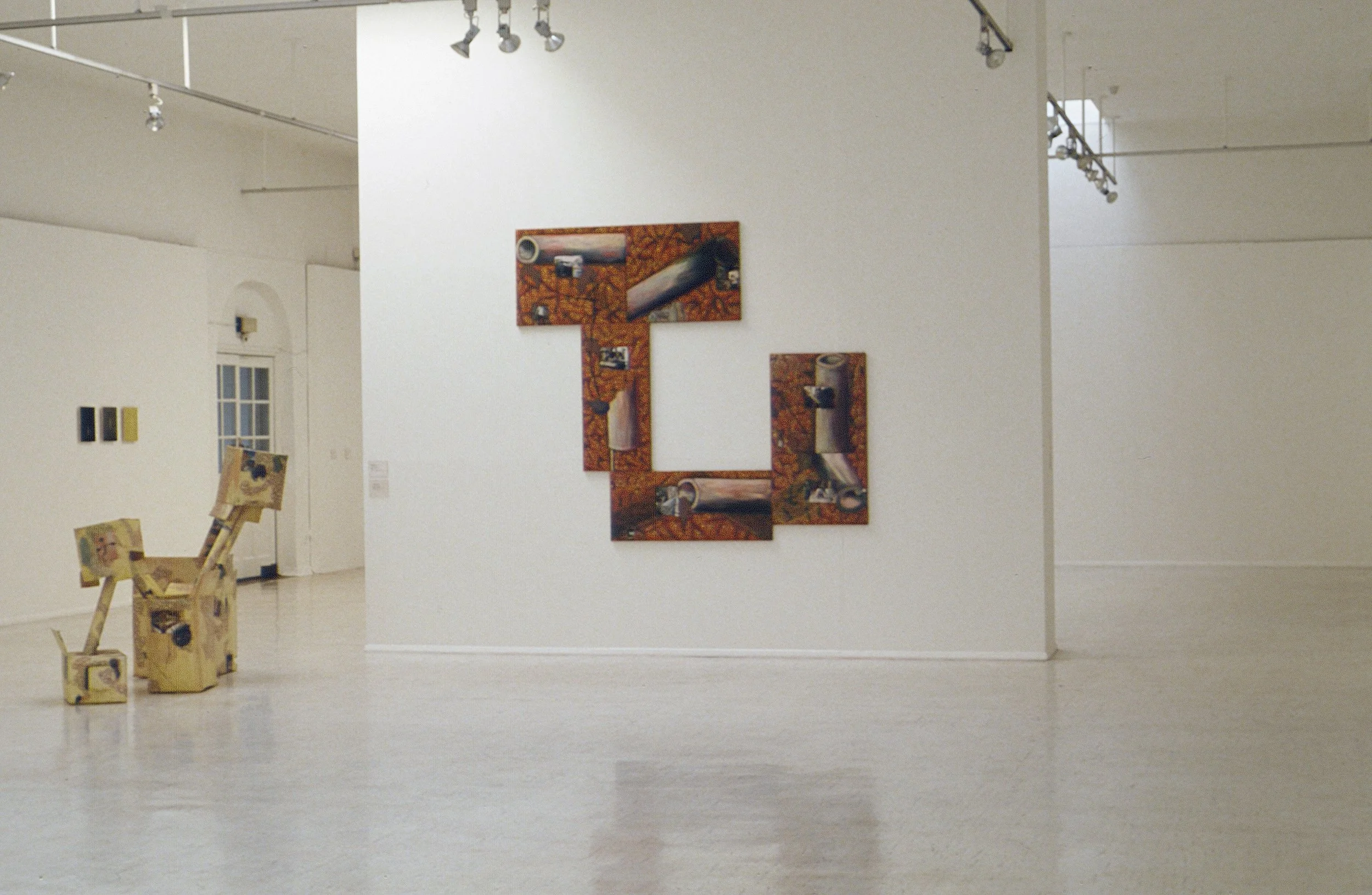
On the adjacent walls of the booking hall at the station Jeffrey Denis’ composite paintings feature floral patterns inspired by the design of William Morris. Chequered with details taken from the station architecture and the destinations of the trains, these paintings evolved out of the recent work which appears at the Centre.
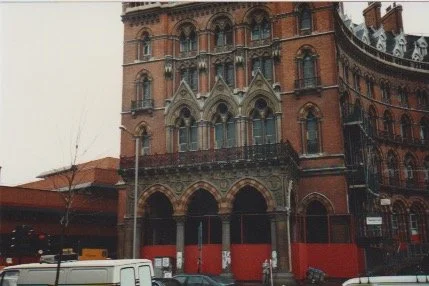
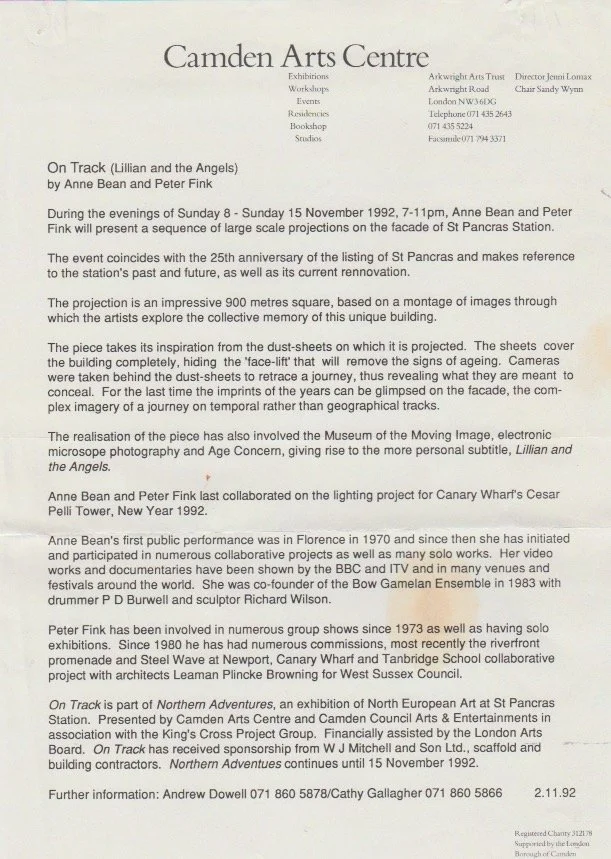
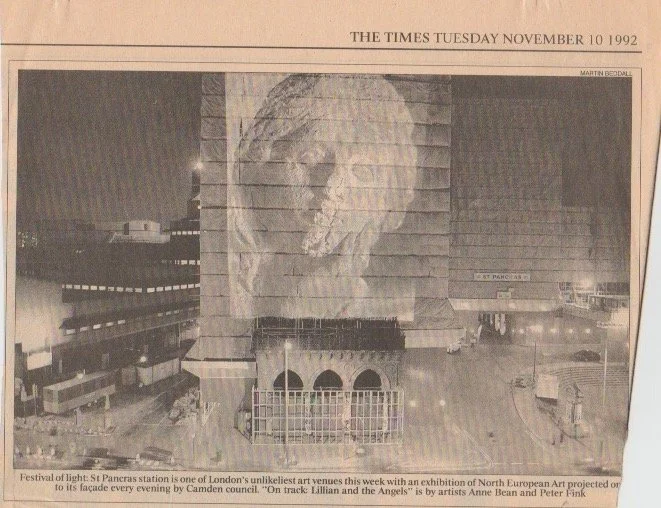
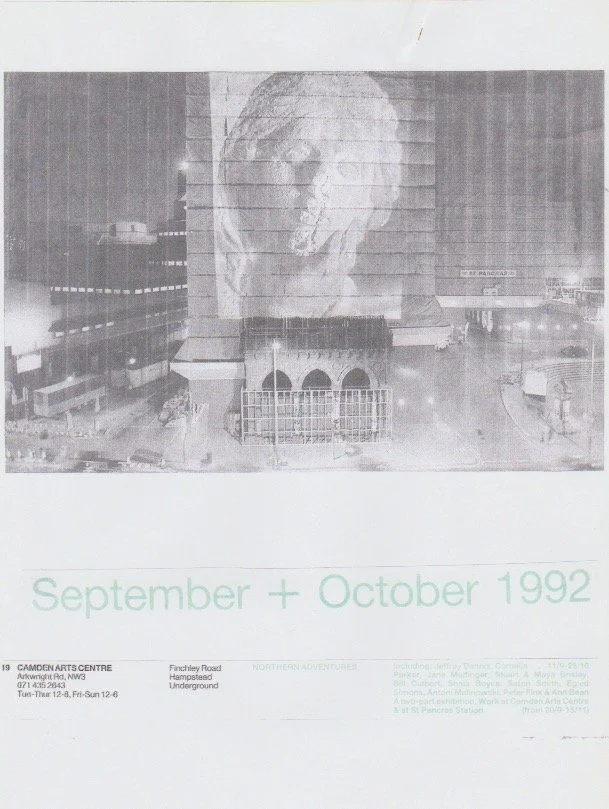
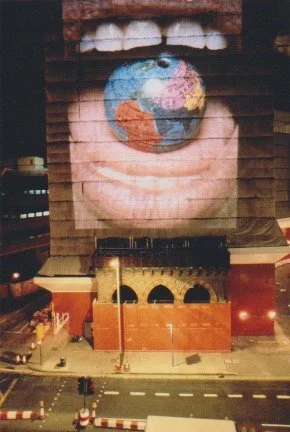
As a finale to Northern Adventures, Anne Bean and Peter Fink will project large-scale images onto the tarpaulin which presently masks the façade of St Pancras. For the final week of the exhibition, from dusk until midnight, these projected images pertinent to the station, its locale and its history – will be a visible manifestation of a project whose central theme has been focused on these facets.
On Track (Lillian and the Angels) By Anne Bean and Peter Fink
During the evenings of Sunday 8 – Sunday 15 November 1992, 7-11pm, Anne Bean and Peter Fink will present a sequence of large-scale projections on the façade 0f St Pancras Station.
The event coincides with the 25th anniversary of the listing of St Pancras and makes reference to the station’s past and future, as well as its current renovation.
The projection is an impressive 900 metres square, based on a montage of images through which the artists explore the collective memory of this unique building.
The piece takes its inspiration from the dustsheets on which it is projected. The sheets cover the building completely, hiding the ‘face-lift’ that will remove the signs of aging. Cameras were taken behind the dustsheets to retrace a journey, thus revealing what they are meant to conceal. For the last time the imprints of the years can be glimpsed on the façade, the complex imagery of a journey on temporal rather than geographical tracks.
The realisation of the piece has also involved the Museum of the Moving Image, electronic.
Microscope photography and Age Concern, giving rise to the more personal subtitle, Lillian and the Angels.
Anne Bean and Peter Fink last collaborated on the lighting project for Canary Wharf’s Cesar Pelli tower, New Year 1992.
On Track is part of Northern Adventures, an exhibition of Northern European Art at St Pancras Station.
Presented by Camden Arts Centre and Camden Arts & Entertainments in association with the Kings Cross Project Group. Financially assisted by the London Arts Board.
On Track has received sponsorship from W J Mitchell and Son Ltd., scaffold and building contractors. Northern Adventures continues until 15 November 1992.
Biographical details
Anne Bean
B 1950 Zambia. Live and works in London
Sonia Boyce
B 1962 London. Lives and works in London
Maya Brisley
B 1955 Istanbul, Turkey. Lives and works in London
Stuart Brisley
B 1933 Surrey, England. Lives and works in London
Bill Cublert
B 1935 Port Chalmers, New Zealand. Lives and works in London and France
Jeffrey Dennis
B 1958 Essex, England. Lives and works in London
Peter Fink
B 1948 London. Lives and works in London
Antoni Malinowski
B 1955 Warsaw, Poland. Lives and works in London
Jane Mulfinger
B 1961 California, USA. Lives and works in London.
Cornelia Parker
B 1956 Cheshire, England. Lives and works in London
Egied Simons
B 1958 Wouw, Holland. Lives and works in Rotterdam
Seton Smith
B 1955 New Jersey, USA. Lives and works in Paris
Selected by Kay Roberts, Paul Collett and Jenni Lomax